Most people fall asleep within 10 to 20 minutes of lights-out. If you're regularly lying there for 45 minutes or more, the fastest fixes are usually not pills — they're small changes to temperature, light, breathing, and what you give your mind to do. Here are eight drug-free ways to fall asleep faster, starting tonight.
 Why "trying harder" to sleep backfires
Sleep is one of the few things that runs away when you chase it. The pressure of watching the clock raises alertness, which is exactly what you don't want. Every method below works the same way: it lowers the effort. You're not forcing sleep — you're removing the things that keep it away.
1. Cool your bedroom to 65–68°F
Your core temperature naturally drops as you drift off, and a cool room helps that process along. The Sleep Foundation recommends keeping the bedroom in the mid-60s Fahrenheit. If that's not possible, a fan, lighter bedding, or even sticking one foot out from under the covers all help your body shed heat.
2. Dim the lights an hour before bed
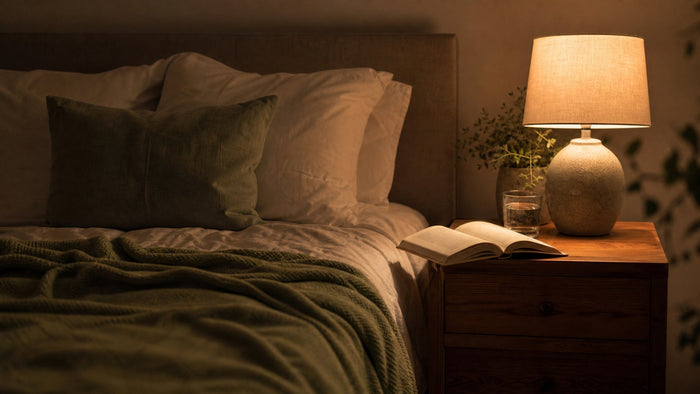
Bright overhead light in the evening tells your brain it's still daytime. Switching to a single warm lamp for the last hour does more for drowsiness than most people expect. According to Harvard Health, dim, warm lighting in the evening supports your circadian rhythm — the internal clock that decides when you feel sleepy.
3. Trade the scroll for paper
Phone screens work against you twice: the light delays melatonin release, and the content keeps your mind busy. Swapping the last 20 minutes of scrolling for a paper book, a magazine, or even a boring instruction manual gives your eyes and mind permission to wind down. If you only change one habit on this list, make it this one.
4. Slow your breathing on purpose
Slow, structured breathing activates the body's rest response. Two patterns worth trying:
- 4-7-8: inhale through the nose for 4 seconds, hold for 7, exhale slowly for 8. Repeat four times.
- Box breathing: inhale 4, hold 4, exhale 4, hold 4. Repeat for a few minutes.
The counting matters as much as the breathing — it gives your mind a simple job, which crowds out the day's leftover noise.
5. Write tomorrow down before you lie down
A study published in the Journal of Experimental Psychology found that people who spent five minutes writing a to-do list for the next day fell asleep faster than those who journaled about tasks already done. Racing thoughts are often just your brain trying not to forget things. Put them on paper and it can stop rehearsing them.
6. Give your mind one gentle thing to focus on
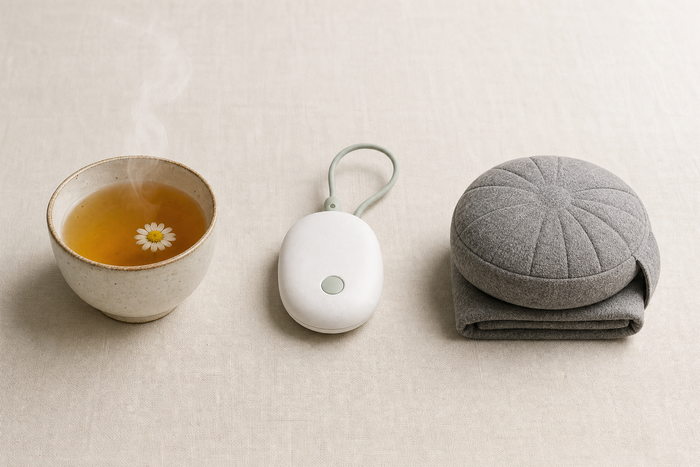
Most of the methods above share a secret: they occupy your attention with something calm and repetitive. That's also the idea behind drug-free wind-down devices. A handheld microcurrent device like the Calmiora Core ($27.99) produces a soft, barely-there pulse you hold in your palm — something quiet for a restless mind to settle on while the 20-minute session runs and shuts itself off.
As one Amazon buyer put it: "It gives off a gentle tingling pulse when you hold it, and it's weirdly calming. I've been using it before bed and noticed I wind down and don't overthink as much." — D., Verified buyer
It won't knock you out — nothing on this list will. It just gives your evening a softer landing, the same way a breathing pattern or a book does, with even less effort.
 7. Keep the same wake-up time — even on weekends
Falling asleep fast starts in the morning. A consistent wake time anchors your body clock, so sleep pressure builds up on schedule by night. Sleeping in two extra hours on Sunday feels good once, then makes Monday night harder. If you change nothing else about your schedule, protect the wake time.
8. If you can't sleep, stop trying
Sleep researchers call it paradoxical intention: lie comfortably, keep your eyes gently open, and tell yourself you're just resting — not trying to sleep. Removing the pressure often lets sleep arrive on its own. And if you've been awake more than 20 minutes, get up, sit somewhere dim, do something quiet, and come back when you feel heavy-eyed. Beds should mean sleep, not struggle.
How the methods compare
| Method | Cost | Effort | Best for |
|---|---|---|---|
| Cool room (65–68°F) | Free | None | Everyone — start here |
| Dim lights + paper book | Free | Low | Screen scrollers |
| 4-7-8 / box breathing | Free | Medium — takes practice | Tension and stress |
| To-do list before bed | Free | Low | Racing, list-making minds |
| Microcurrent device (e.g. Calmiora Core) | $27.99 one-time | None — hold it, it switches off itself | Overthinkers who want zero routine |
| Melatonin | $5–15/bottle, ongoing | None | Occasional jet lag — grogginess and dosing issues are common |
Where does melatonin fit in?
Melatonin can help with jet lag and shifted schedules, but Johns Hopkins sleep experts suggest treating it as a short-term tool rather than a nightly habit — and many people report next-morning grogginess. The habits above address the more common problem: a mind and body that haven't been given the chance to slow down. If racing thoughts are your main enemy, our guide on quieting racing thoughts at night goes deeper.
FAQ
How long should it take to fall asleep?
10 to 20 minutes is typical for healthy sleepers. Regularly dropping off in under 5 minutes may actually signal sleep deprivation, while 45+ minutes most nights means your wind-down routine — not your mattress — probably needs attention.
Do these methods work the first night?
Temperature, lighting, and screen changes often help immediately. Breathing techniques and consistent wake times usually take one to two weeks of practice before they feel natural and reliable. Stack two or three methods rather than betting on one.
What's the fastest method on this list?
Cooling the room and dimming the lights work tonight with zero practice. Pair them with the to-do list trick — five minutes of writing — and you've covered body, light, and mind in one evening.
What if I fall asleep fine but wake up at 3am?
Keep the lights off, avoid checking the time, and use a slow breathing pattern to ride the wave back down. Middle-of-the-night waking is common and usually harmless; clock-watching is what turns it into a problem.
Try a gentler way to wind down
Calmiora's drug-free microcurrent devices start at $27.99 — with a 30-day money-back guarantee and a 90-day warranty, there's nothing to lose except a few restless nights.
Calmiora products are consumer wellness electronics, not medical devices. They are not intended to diagnose, treat, cure, or prevent any disease. If you have a heart condition, an implanted medical device, a seizure disorder, or are pregnant, consult your healthcare provider before use. This article is for general information and is not medical advice.